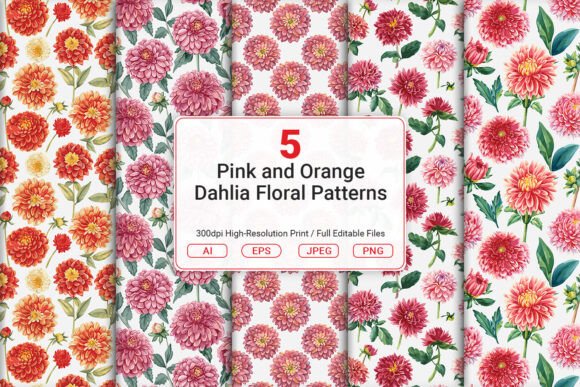
Designing with Pink and Orange Dahlia Floral Patterns: A Comprehensive Guide to Selection and Application
In the realm of graphic design and textile arts, finding a motif that balances vibrancy with sophistication is often a challenging endeavor. Pink and orange dahlia floral patterns have emerged as a distinctive choice for professionals seeking to inject warmth and elegance into their projects. Unlike generic botanical prints, this specific color combination offers a dynamic contrast that captures attention without overwhelming the viewer. The dahlia, known for its intricate petal structure, provides a complex canvas that renders beautifully in high-resolution formats, making it an ideal candidate for both digital and physical media.
When evaluating design assets, the decision often hinges on versatility and technical quality. A set of five high-resolution patterns featuring these hues is not merely a collection of images; it represents a strategic resource for creators who need consistency across multiple deliverables. Whether you are crafting a wedding invitation suite or developing a line of home decor, the ability to switch between subtle backgrounds and bold focal points within the same thematic family is invaluable. This guide explores the practical applications, technical advantages, and comparative benefits of utilizing Pink and Orange Dahlia Floral Patterns in your creative workflow.
Understanding the Distinctive Qualities of the Design Set
The core appeal of Pink and Orange Dahlia Floral Patterns lies in the psychological impact of the color palette combined with the structural beauty of the flower itself. Pink evokes feelings of romance, gentleness, and creativity, while orange brings energy, enthusiasm, and optimism. When paired, they create a visual rhythm that is neither too cool nor too aggressive. This balance makes the pattern suitable for a wide demographic, appealing to adults aged 20 to 50 who appreciate modern aesthetics with a touch of classic charm.
What sets this particular set apart from other floral collections is the depth provided by the inclusion of multiple file formats. In professional design environments, having access to Ai Illustrator files, Eps files, and high-resolution raster images like JPG and PNG at 3600 x 3600 pixels ensures that the asset can scale from a small mobile wallpaper to a large-format wall art piece without losing fidelity. The open-source nature of the AI files further distinguishes this package, allowing designers to manipulate vector paths, adjust colors, and modify layout elements to suit specific brand guidelines or client preferences.
Technical Specifications and File Utility
The technical specifications of a design asset often dictate its usability. A standard image might suffice for a quick social media post, but for print-on-demand products or high-end stationery, resolution is paramount. The inclusion of 12 x 12 inch images at 3600 pixels per side guarantees a DPI (dots per inch) that meets commercial printing standards. This eliminates the common pitfall of pixelation when scaling up designs for fabric or paper.
- Vector Formats (Ai/Eps): Essential for scalable graphics where edges must remain crisp regardless of size. These formats allow for non-destructive editing.
- Raster Formats (JPG/PNG): Ideal for immediate use in web design, photo editing software, or direct printing where layer manipulation is not required.
This dual approach to file delivery means that a single purchase can serve diverse needs, reducing the necessity to source separate assets for different stages of a project.
Comparative Analysis: Versatility Across Industries
When comparing Pink and Orange Dahlia Floral Patterns to other floral options, such as monochromatic roses or abstract geometric florals, the primary differentiator is adaptability. Monochromatic designs offer a minimalist aesthetic but may lack the pop required for promotional materials or gift packaging. Conversely, highly saturated, multi-colored bouquets can sometimes appear chaotic if not balanced correctly. The pink and orange dahlia strikes a middle ground, offering enough color variation to be engaging while maintaining a cohesive theme.
Fabric and Textile Applications
For those involved in the fashion industry or home textiles, the seamless nature of these patterns is critical. When designing for fabric print-on-demand products, the repeat capability of the pattern determines the final look. The high resolution of the provided files ensures that the transition between repeats is invisible, creating a continuous flow of blooms. Compared to lower-quality alternatives, this set prevents the "tiled" appearance that can ruin a garment's silhouette or a curtain's drape.
Stationery and Corporate Branding
In the sector of greeting cards, invitations, and planners, the tone of the design is just as important as the visual appeal. Pink and Orange Dahlia Floral Patterns convey a sense of celebration and warmth, making them particularly effective for birthdays, bridal showers, and corporate events that aim to feel welcoming rather than strictly formal. While black-and-white floral patterns are timeless, they often require additional graphic elements to stand out. The inherent color of the dahlia set reduces the need for heavy textural overlays, streamlining the design process.
Decision Factors: When to Choose This Pattern Set
Selecting the right design asset involves weighing specific project requirements against the capabilities of the available resources. Understanding the strengths and limitations of Pink and Orange Dahlia Floral Patterns helps in making an informed decision.
Ideal Use Cases
This pattern set is best suited for projects that require a blend of elegance and modernity. It excels in scenarios where:
- High-Resolution Print is Required: Projects involving wall art, large-scale banners, or premium packaging benefit from the 3600-pixel resolution.
- Customization is Needed: The availability of open-source AI files allows designers to extract individual dahlias or alter the background color to match a specific brand identity.
- Multi-Platform Consistency is Key: Using the same pattern across a website, printed notebooks, and physical invitations creates a unified brand experience.
Limited Scenarios and Alternatives
While versatile, this pattern may not be the optimal choice for every situation. For instance, if a project demands a strictly vintage or sepia-toned aesthetic, the vibrant pink and orange hues might clash with the desired mood. In such cases, a desaturated version of a floral pattern or a completely different botanical style might be more appropriate. Similarly, for minimalistic web interfaces where space is at a premium, a busy floral pattern could distract from the primary content. In these instances, using the pattern only as a subtle texture or a background element with low opacity is recommended.
Practical Implementation Strategies
To maximize the value of Pink and Orange Dahlia Floral Patterns, designers should consider how to integrate them effectively across various mediums. The goal is to enhance the product without letting the pattern dominate the message.
Invitations and Greeting Cards
For invitations, the pattern works well as a border or a full background. When used as a background, ensure that the text color contrasts sufficiently. White or cream text often pairs beautifully with the darker shades of the dahlia petals, while gold foil accents can elevate the luxury feel. For greeting cards, isolating a single bloom from the vector file allows for a focal point that draws the eye immediately.
Digital Products and Wallpapers
The 3600 x 3600 pixel dimension makes these patterns perfect for digital wallpapers on tablets and smartphones. Users looking for personalized devices will appreciate the high detail. Furthermore, for digital planners and journal covers, the pattern adds a tactile feel to a virtual interface, bridging the gap between digital utility and artistic expression.
Gift Wrapping and Packaging
In the retail and gifting sector, packaging is the first interaction a customer has with a product. Using Pink and Orange Dahlia Floral Patterns for custom wrapping paper or labels transforms a simple gift into a curated experience. The versatility of the EPS format allows for easy resizing to fit various box dimensions, ensuring that the design looks intentional and professional regardless of the package size.
Evaluating Long-Term Value and Flexibility
One of the most significant advantages of this specific set is its longevity. Trends in floral design often cycle, but the classic dahlia shape combined with warm, inviting colors tends to remain relevant across seasons. Unlike seasonal themes that expire after a few months, a pink and orange dahlia collection can be utilized year-round, from spring garden parties to autumn harvest celebrations.
Furthermore, the inclusion of multiple file formats future-proofs the investment. As technology evolves, the ability to export to new formats or edit the original vector source ensures that the asset remains usable for years to come. This flexibility is particularly beneficial for freelancers and small business owners who need to maintain a consistent visual identity across changing platforms and media types.
Conclusion on Selection and Suitability
Ultimately, the choice of a floral pattern depends on the specific goals of the project and the desired emotional response from the audience. Pink and Orange Dahlia Floral Patterns offer a robust solution for those seeking a balance of elegance, color, and technical reliability. By providing high-resolution raster files alongside editable vector sources, this set accommodates a broad range of applications, from intimate handmade crafts to mass-produced commercial goods.
While no single design asset is a universal panacea, the versatility of this collection makes it a strong contender in the landscape of floral design resources. Whether you are creating a fabric line, designing a series of invitations, or updating your digital workspace, the thoughtful integration of these patterns can significantly elevate the perceived quality of your work. By understanding the strengths of the format and applying them to the appropriate contexts, creators can achieve professional results that resonate with their target audience.